Design Around the KV-Cache
The single most important metric for a production-stage AI agent: KV-cache hit rate
Why it matters:
- Directly affects latency and cost
- Context grows with every step, output remains short
- Average input-to-output token ratio: ~100:1
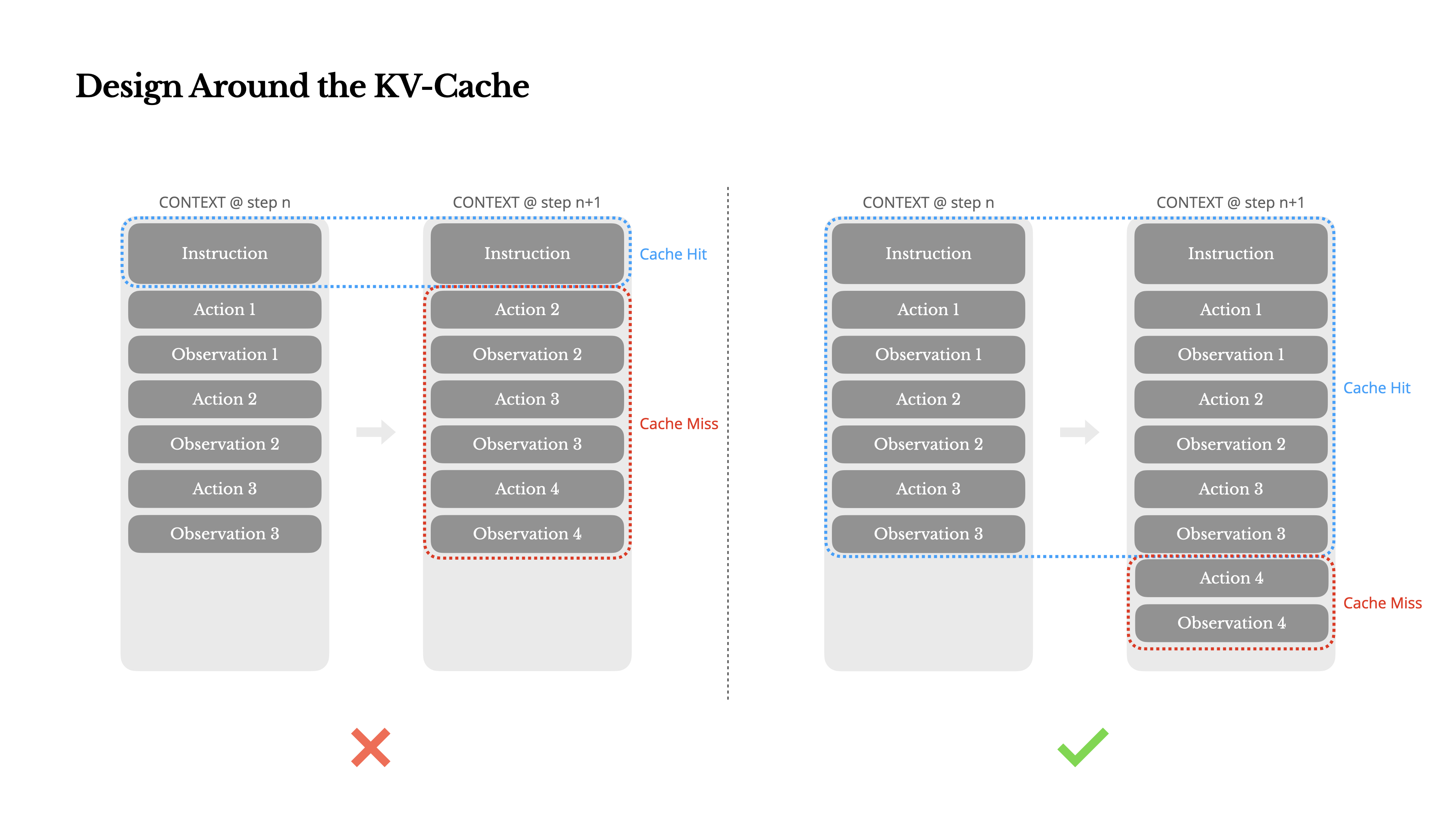
Cached input tokens cost 0.30 USD/MTok vs 3 USD/MTok for uncached - a 10x difference!
Mask, Don't Remove
As agents gain more capabilities, their action space grows more complex
Dynamic action spaces (like RAG-based tool loading) cause problems:
- Changes invalidate KV-cache for subsequent actions
- Model gets confused when previous actions refer to undefined tools
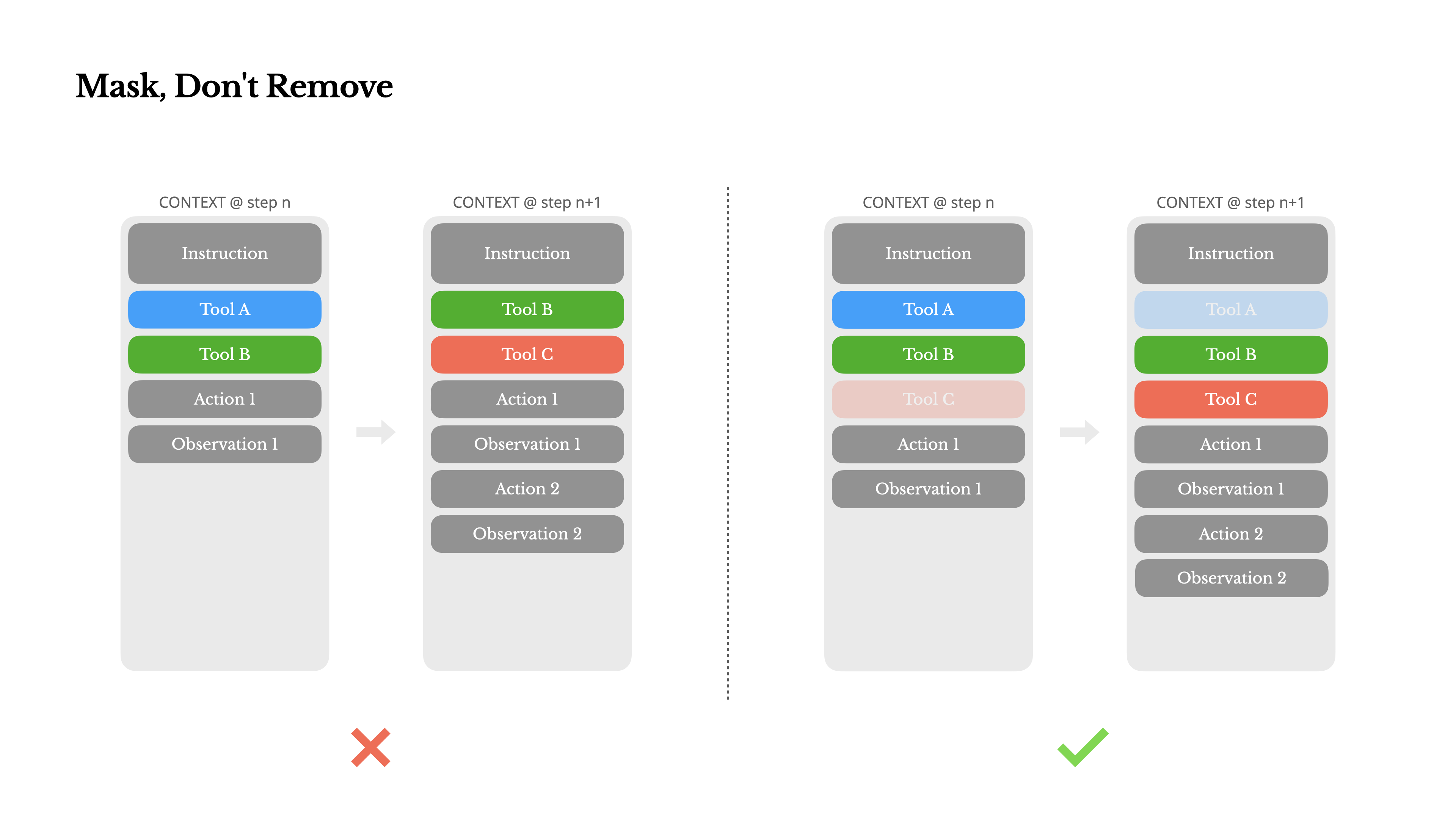
Manus uses a context-aware state machine to manage tool availability by masking token logits during decoding
Use the File System as Context
Modern LLMs offer 128K+ token contexts, but in agentic scenarios:
- Observations can be huge (web pages, PDFs)
- Model performance degrades beyond certain context lengths
- Long inputs are expensive, even with prefix caching
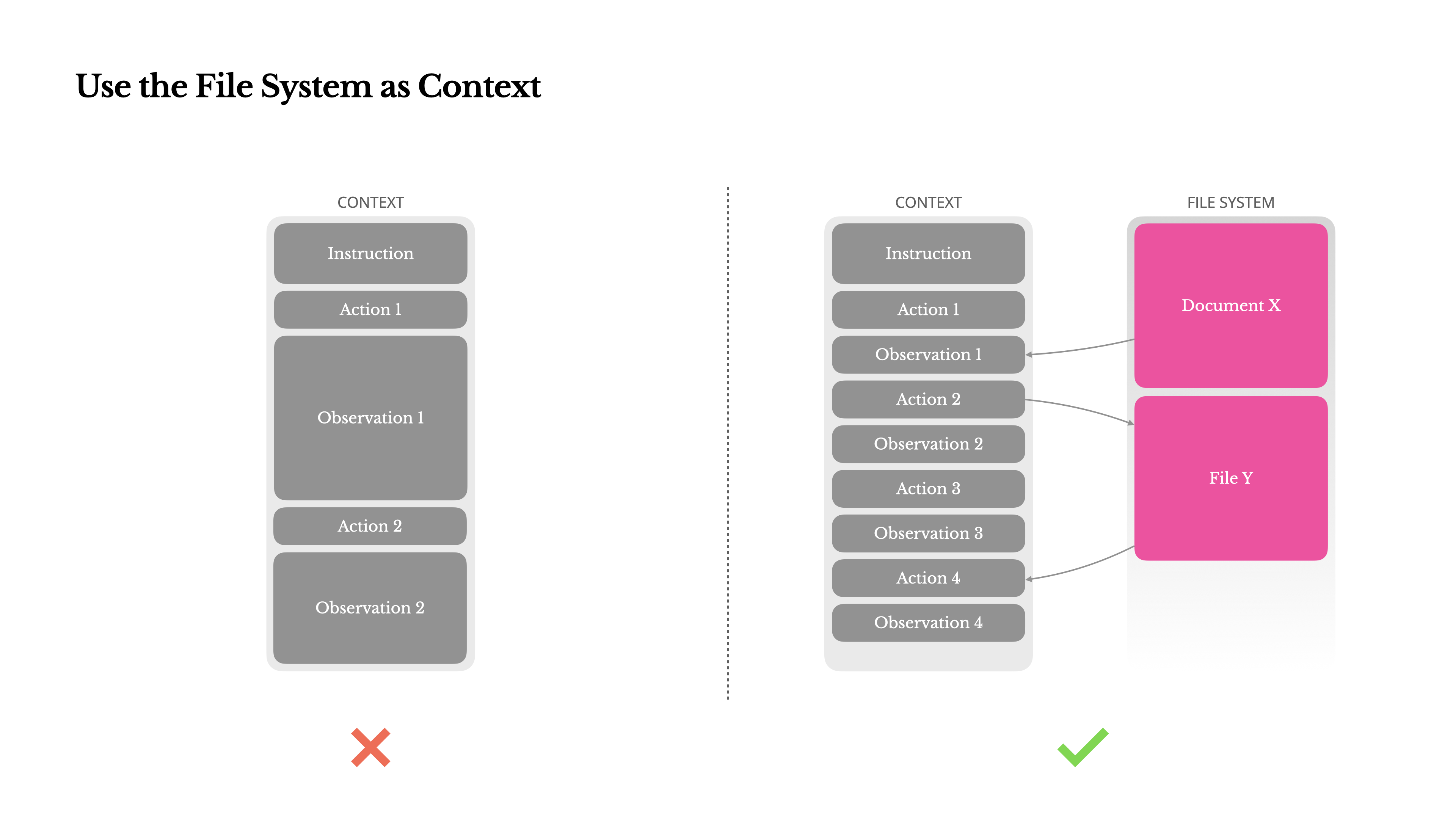
Manus treats the file system as ultimate context: unlimited, persistent, and directly operable by the agent
Compression strategies are always designed to be restorable
Manipulate Attention Through Recitation
Manus creates and updates todo.md files during complex tasks
Why this matters:
- Typical tasks require ~50 tool calls - a long loop
- Models can drift off-topic or forget earlier goals
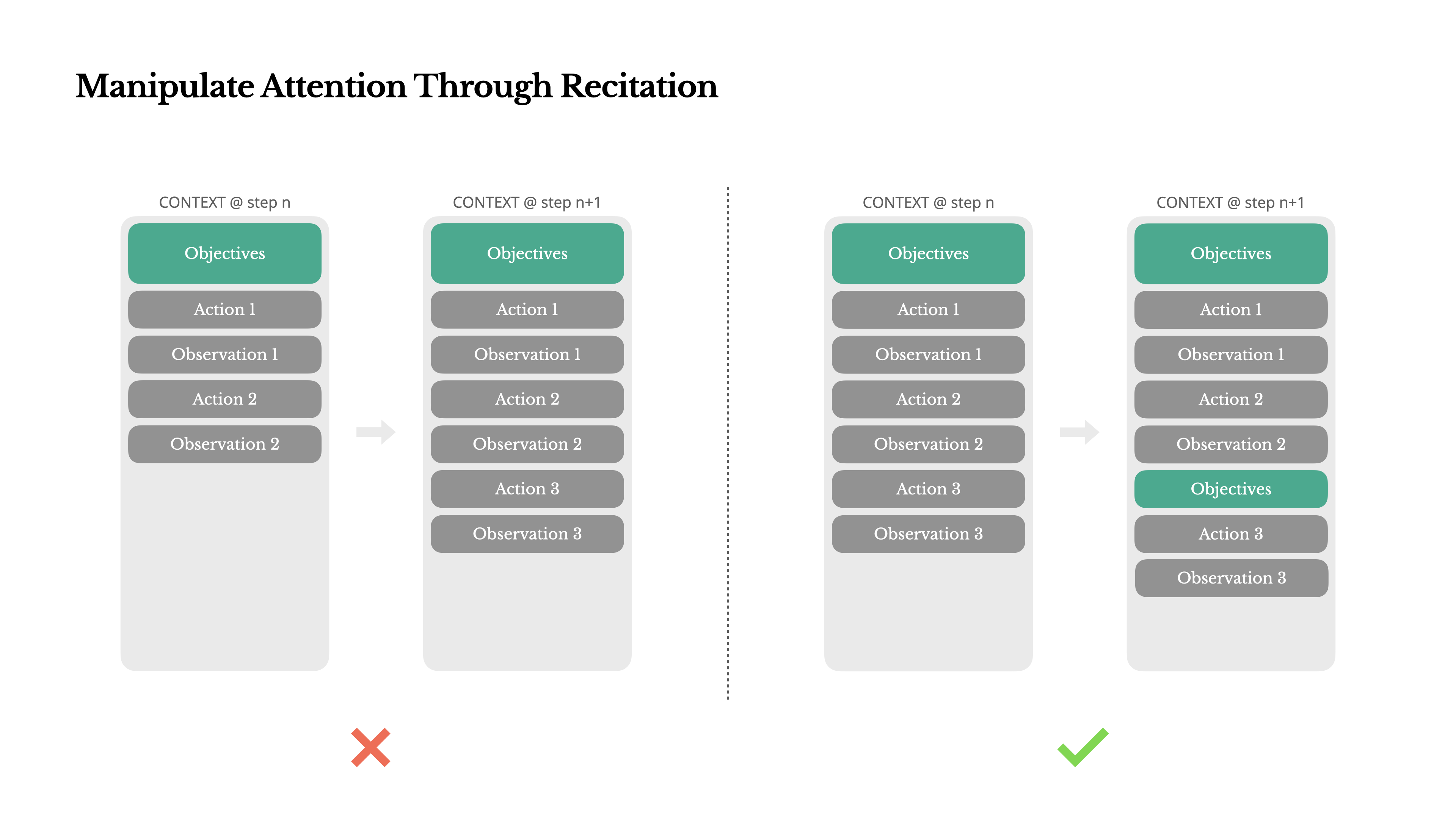
By rewriting the todo list, Manus recites objectives into context end, pushing global plan into recent attention span
This avoids "lost-in-the-middle" issues and reduces goal misalignment
Keep the Wrong Stuff In
Agents make mistakes - that's reality, not a bug
Common impulse: Hide errors, clean up traces, retry actions
Problem: Erasing failure removes evidence
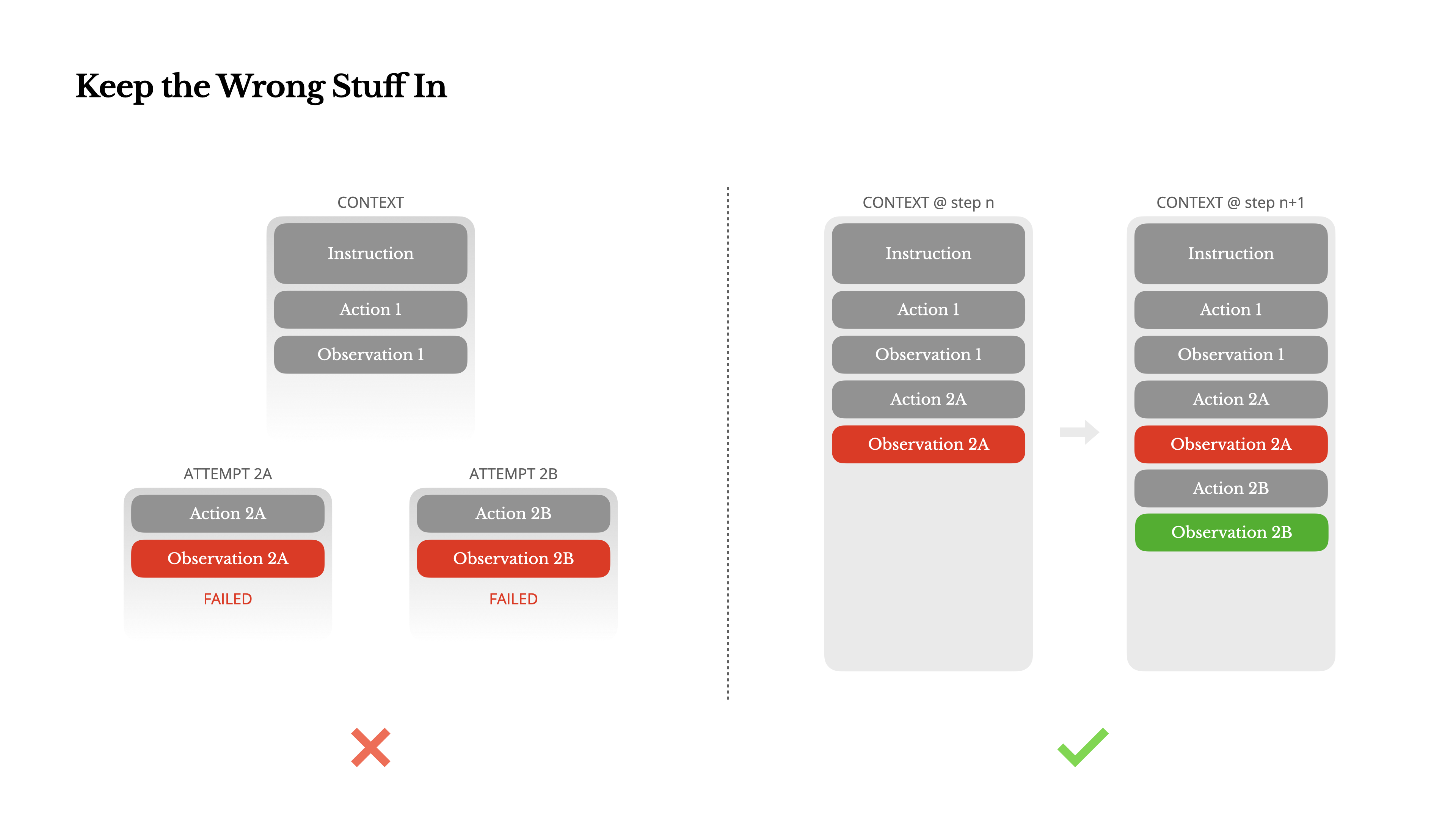
Most effective improvement: Leave wrong turns in context
When model sees failed action + observation, it implicitly updates internal beliefs
Error recovery is one of the clearest indicators of true agentic behavior
Don't Get Few-Shotted
Few-shot prompting can backfire in agent systems
Language models are excellent mimics - they imitate patterns in context
Danger in tasks with repetitive decisions:
- Agent falls into rhythm, repeating similar actions
- Leads to drift, overgeneralization, or hallucination
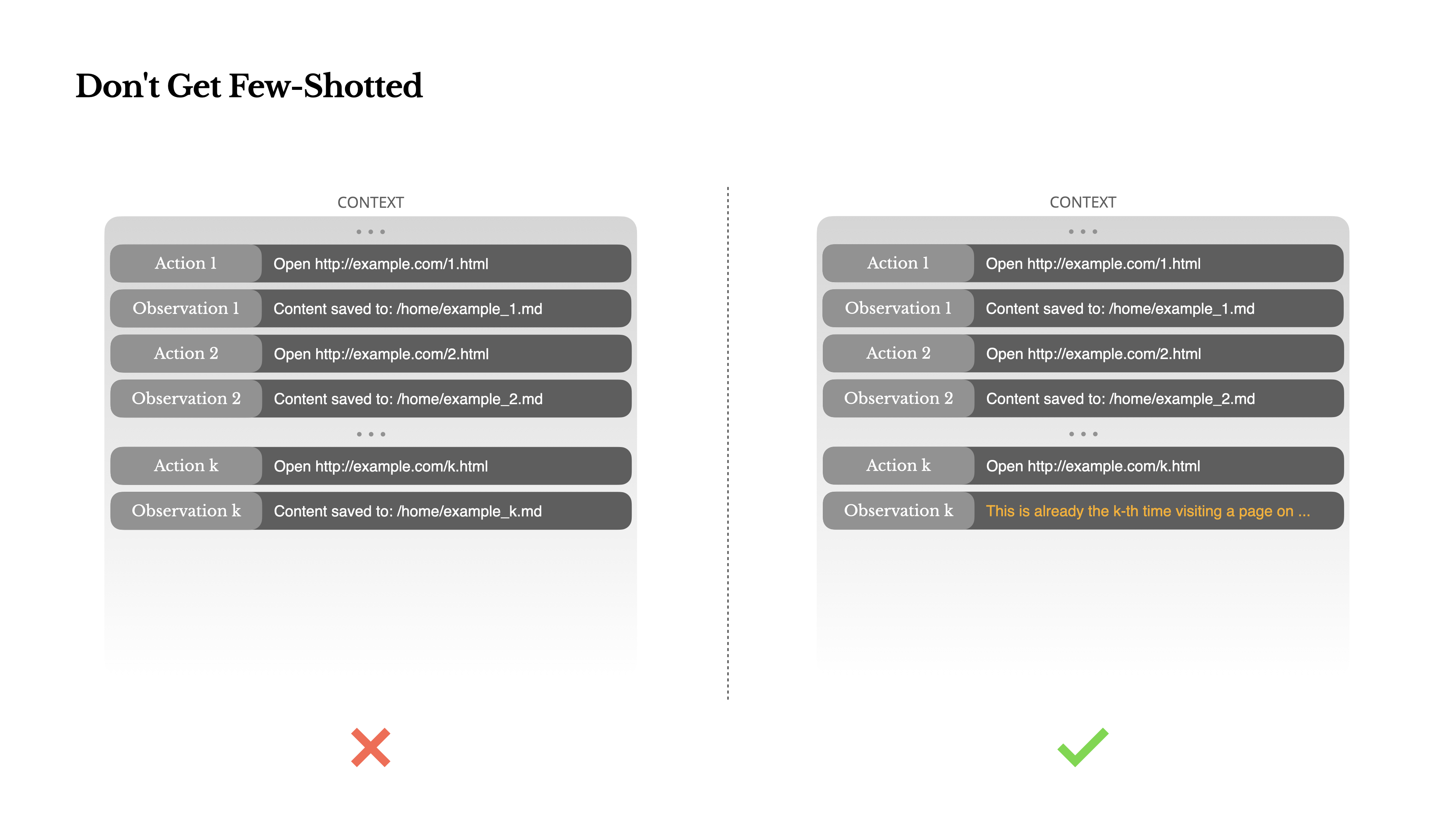
Fix: Increase diversity with structured variation in actions and observations
The more uniform your context, the more brittle your agent becomes